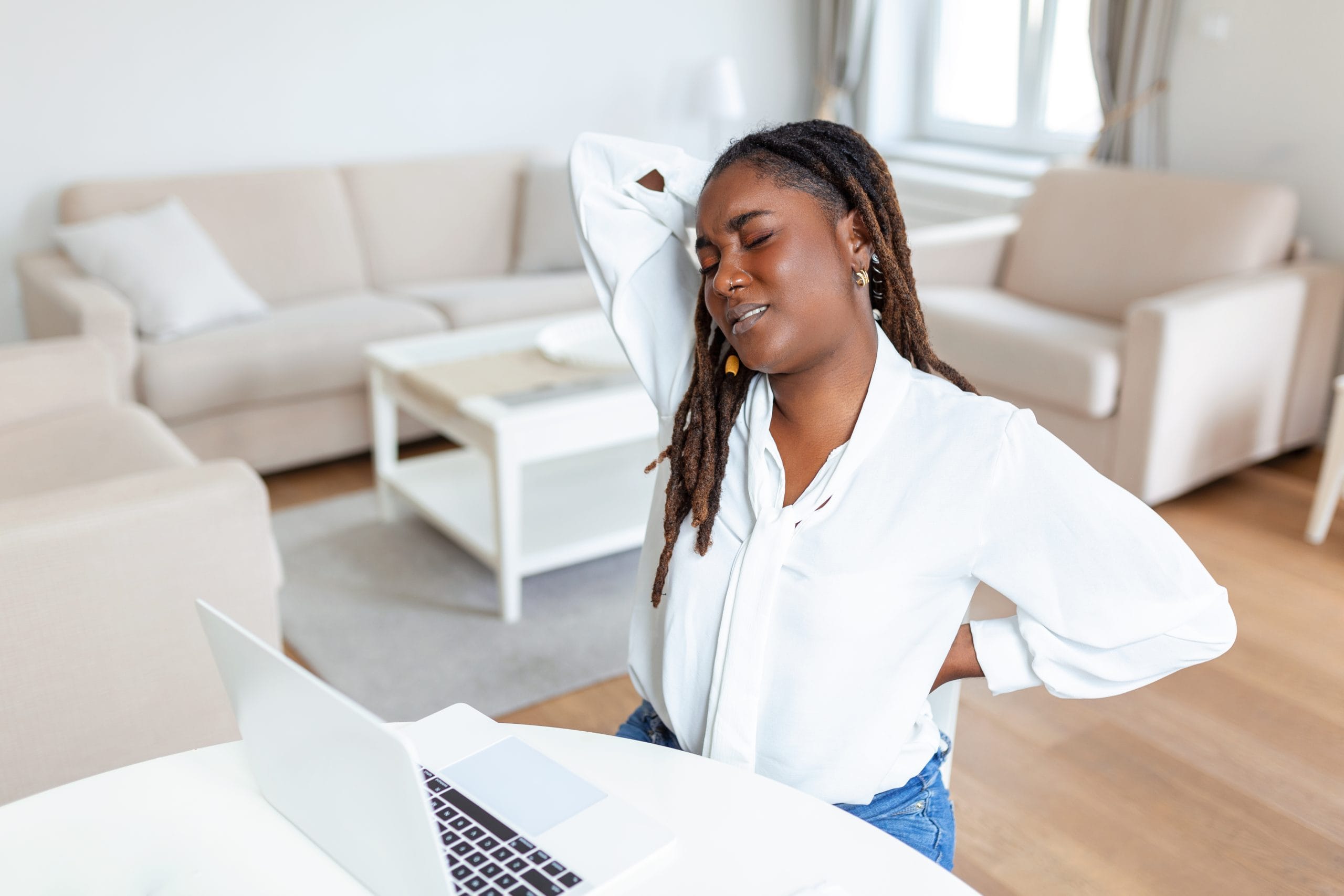
You know the feeling. It’s 4 p.m., you stand up from your desk, and your body creaks like it’s aged a decade since lunch. Your hips feel locked. Your lower back is tight. Your shoulders have somehow migrated up toward your ears. You didn’t do anything “wrong” today — you just sat, like you do most days, for eight-plus hours.
You are definitely not imagining the damage a desk job does to your body.
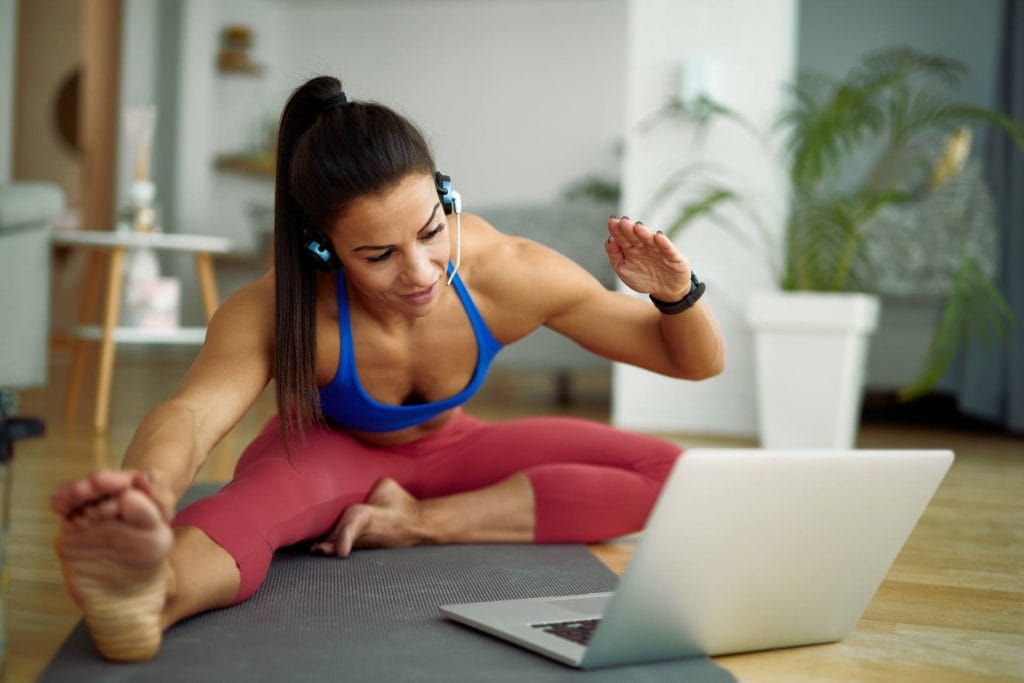
Here’s the fun part though: fixing it doesn’t require a gym membership, fancy equipment, or turning your evening into a second job. Just a mat, some floor space, and a couple of sessions a week.
What Does Sitting All Day Actually Do to Your Body?
Desk work isn’t natural for your body — it actively reshapes your now “neutral” position. Prolonged sitting will tighten the hip flexors, weaken the glutes, and effectively “switch off” the deep core muscles that are supposed to hold your spine upright. Meanwhile, your upper traps and hip flexors start overcompensating, which is exactly the pattern behind that end-of-day stiffness and the dull ache creeping into your lower back and neck.
None of this happens overnight — it’s the slow result of the same posture, held hour after hour, day after day, for years. That’s also why the “just get up and stretch” approach only goes so far. It treats the symptom, not the underlying muscle imbalance.
The Science Says It Actually Works
We won’t bury you in the numbers, but here’s the short version: researchers have actually put Pilates to the test on people with desk jobs, not just gym-goers or athletes. A 2025 study had office workers do structured reformer Pilates twice a week for 8 weeks and found real, measurable improvements in posture. Another trial found that adding Pilates to an existing office-worker exercise routine improved pain, posture, and core endurance more than the routine alone — and did it in just 6 weeks.
Worth noting: these are still relatively small studies, so think of this as strong early evidence rather than a guaranteed outcome for everyone. But the direction is consistent — structured Pilates work, whether on a reformer or a mat, measurably changes posture and pain in people with desk jobs, and it does so in a matter of weeks, not months or years. The same deep core, glute, and spinal work you’d do in one well-designed class genuinely changes how your body holds itself, and it does it faster than you’d think.
Why Mat, Specifically
Mat Pilates uses your own body weight and breath instead of springs and a carriage, which makes it genuinely doable anywhere — your living room, a hotel room, your lounge floor while the kettle boils. It’s low-impact, low-equipment, and skips the commute entirely. And because it targets the same deep stabilising muscles the research points to, you’re still targeting those desired muscle groups.
What Improvement Actually Looks Like
Stick with it for 6–8 weeks and here’s what tends to shift:
- Less end-of-day stiffness, especially through the hips and lower back
- Better posture as your new default — not just when you remember to think about it
- Fewer tension headaches from forward head posture and tight shoulders
- More energy come 3 p.m., since under-used muscles are a sneaky contributor to that afternoon slump
Why Guided Mat Pilates Beats a Random YouTube Video
Mat Pilates is easy to access — it’s not always easy to do “well”. Form matters, especially if you’re working around an old injury, a stiff shoulder, or years of compensating from sitting. That’s why our online classes are led live: an instructor watches your form in real time and adjusts on the spot — easing a movement for a bad knee, modifying for pregnancy, or scaling things up once an exercise starts feeling too easy. You get the attention of an in-studio class without leaving the house.
Frequently Asked Questions
What equipment do I actually need to get started?
Just a mat and comfortable clothes you can move in. No reformer, no resistance bands, no special shoes — that’s part of what makes it such an easy habit to start at home.
I’ve never done Pilates before — is it hard to pick up?
Not at all. The movements are slow and controlled rather than fast-paced, which actually makes it more approachable for beginners than a lot of other workouts. Our instructors build classes around whoever’s in the room, so first-timers get the same attention as anyone else.
Is mat Pilates safe if I have an old injury or chronic pain?
For most people, yes — but it depends on the injury, which is exactly why guided classes matter more than a random online video. Our instructors ask about injuries upfront and offer modifications in real time, so you’re not guessing whether a move is right for your body.
How is a live online class different from just following a YouTube video?
A recorded video can’t see you. Ours are led live, so an instructor is actually watching your form, correcting it in the moment, and adjusting the pace or difficulty as you go — the same attentiveness you’d get in a studio, minus the commute.
A Realistic Starting Point
Your body doesn’t need a studio membership to recover from your desk — it needs a mat, two sessions a week, and someone making sure you’re doing it right. That’s exactly what our online classes are for: real instructors guiding you through every movement, catering the pace and modifications to your skill level, goals, and whatever old injuries or limitations you’re working around.
Join Pilates First and train with one of our experienced instructors from the comfort of your home.
Sources
- Reformer Pilates and posture in office workers (2025), BMC Sports Science, Medicine and Rehabilitation: https://link.springer.com/article/10.1186/s13102-025-01338-5
- Desk-based exercise combined with Pilates for office workers — pain, posture and core endurance, randomized controlled trial: https://clinicaltrials.gov/study/NCT07763925
Disclaimer: This article is for general informational purposes only and isn’t a substitute for professional medical advice. If you have an existing injury, chronic pain, or a medical condition, check with your doctor or physiotherapist before starting a new exercise routine.